click here to register and submit your day/time preferences for lessons:
https://forms.gle/MtPnUFpfum2GyauW9
Category: Tips
-

Registration is open!
-
Summer Lessons
Summer is just around the corner, and I’d love to keep the music going with you. Here’s how summer lessons work:
🎻 Summer lessons are à la carte — sign up for as many or as few as you’d like.
📅 Scheduling
Use the link below to book directly on my calendar. Please be aware that your regular lesson day and time may not be available during July and August, and not all weeks are open — so browse what’s there and grab what works for you.
💰 Pricing
• 30-minute lesson: $35
• 45- or 60-minute lessons: reserve two consecutive slots (let me know if it’s for a 45-minute lesson so I can invoice accordingly!)
You’ll be invoiced after your appointments are scheduled. Payment is required for all summer lessons on or before the first lesson in July. 10% cash discount is still applicable for summer lessons.
🌟 A little encouragement
I know summers get busy, but even a handful of lessons makes a real difference. Students who maintain some regularity over the summer come back to fall lessons ready to build on what they’ve learned rather than spending the first month getting back up to speed. Sign up for as many as you can!
👉 APPOINTMENT SCHEDULER:
Port Orchard Studio:
https://calendar.app.google/Zkx4TPTWZDWXLLHR6Sequim and Port Angeles lessons:
https://calendar.app.google/hGGqk4h1BAa2aBjk6 -
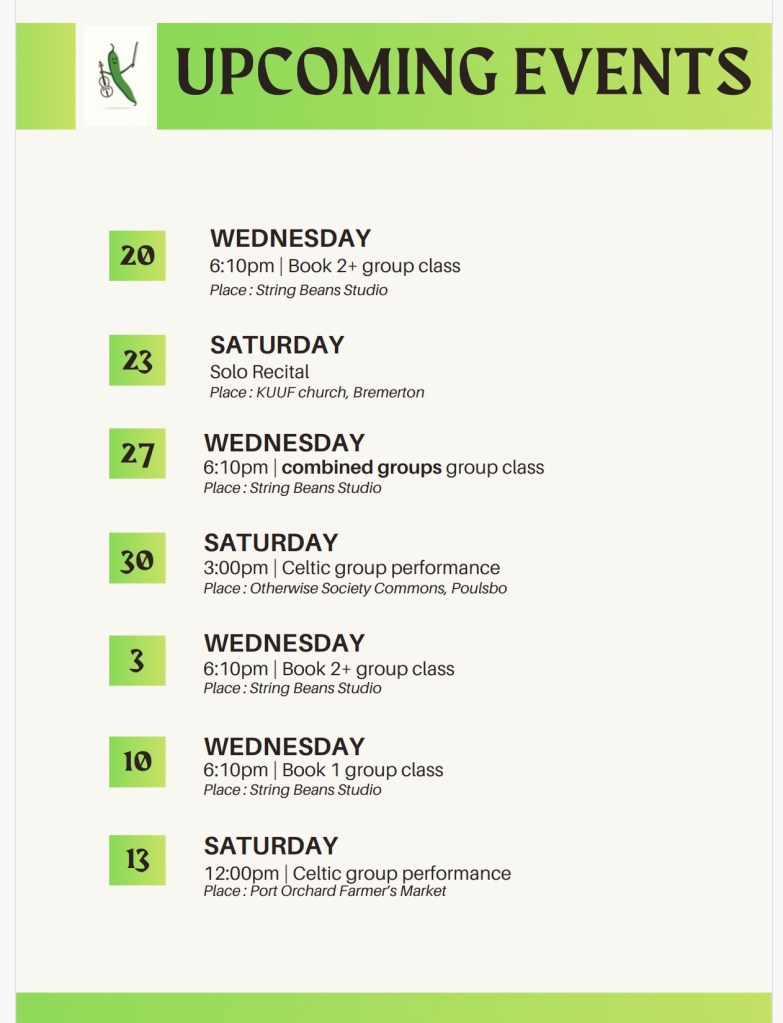
Saturday 6/13 Farmer’s Market
If you have been practicing Celtic music in group class, you know who you are!
If you haven’t been coming to group classes and getting ready for this performance, please come support your fellow violinists on Saturday!
The nitty gritty:- there will be no group class this Wednesday 6/10
- wear your String Beans T-Shirt
- I’m picking them up tomorrow and will hand them out during lessons this week, and will bring them to the Market if I haven’t given you yours before then!
- arrive early and account for parking being potentially challenging
- I will be there around 11:15
- bring a sturdy stand if you have one
————————————————
This is the info from the Farmer’s Market:We’re looking forward to having The String Beans play at the Port Orchard Farmers Market this Saturday (June 13)! You will have set up, performance, and breakdown use of the Gazebo area from 12PM to 2PM. The market is open 9AM-2PM. We’ve got a full day of entertainment planned with Two Fiddles Plus playing throughout the market footprint (wandering performers) from 9AM to 12PM.
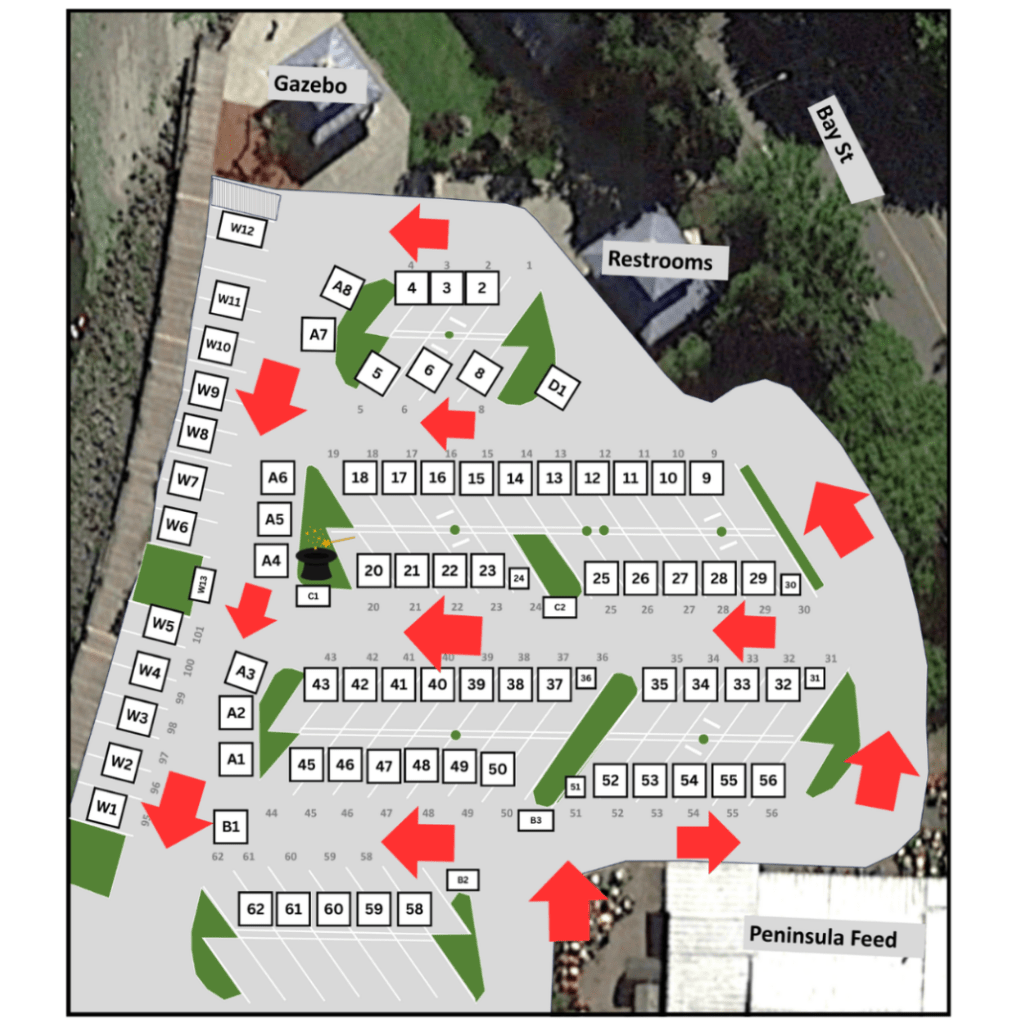
PARKING
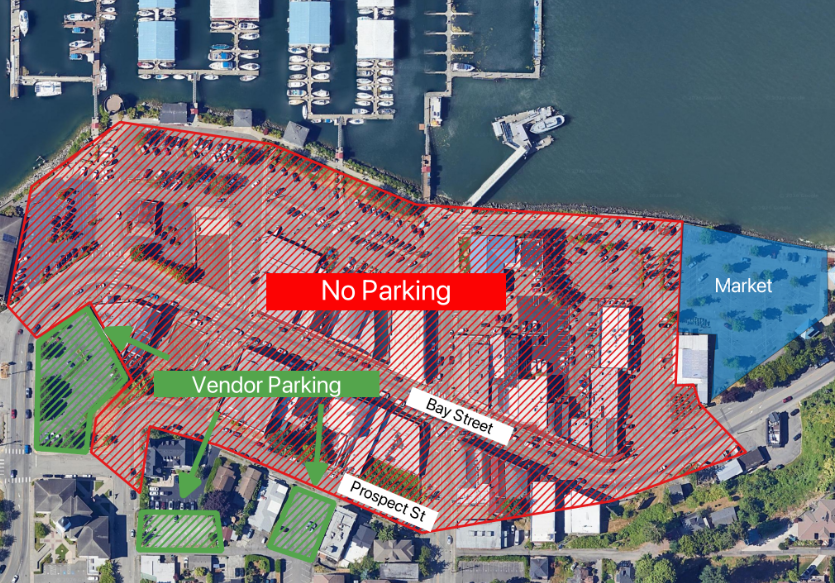
Attached is the Vendor Parking Lots map that shows parking lots (marked in green) available for you to use in the downtown Port Orchard area. Please be aware that many other parking areas in Port Orchard have 2 and 4-Hour parking limits, and there is a small area of paid parking closest to the market. The parking lots in the attached document are available to us on a first come first served basis from 6AM to 4PM. Print the map or have it handy on your phone.
- Kitsap County Family Support lot, 730 Prospect Street
- Gravel lot across the street from PO City Hall main entrance, 216 Prospect Street
- Kitsap Bank overflow lot across Bay Street from the Bank and next to to Western WA Center for the Arts
LOAD-IN
If you arrive before we become pedestrian only (8:30AM), you can drive right over to the Gazebo to unload and then move your car to one of the parking lots. The attached Base Map shows in red arrows the one way traffic of the market for loading/unloading.
Our market is pedestrian only from 8:30AM to 2:15PM, so you will need to carry/cart items to the Gazebo if you arrive after 8:30AM. After 8:30AM, I recommend that you pull your vehicle up to the sandwich board signs that block off the market area to unload. We have a cart at the Market Info Booth you can borrow if needed. The Gazebo is marked on the map and there is power available.
LOAD-OUT
At 2:15PM we open the parking lot up to vendor traffic for loading out. If you load out prior to 2:15PM, you can pull your vehicle up to the sandwich board signs that block off the market area to load.
Please note that while we do allow sound amplification, musicians performances must not interfere with market operations or vendors ability to conduct business. Please keep your sound amplification to a low/medium level. At any time, market staff may request that you turn down the volume. Market operations and vendor rights take priority and we ask musicians to respond to staff requests as quickly as possible.
I will be announcing your performance with us on social media and in our newsletter this Thursday.
————————————————
Vendor Parking Map 2026.png
Base Market Map 2026.png
-
Time for a String Check!
With the solo recital coming up, this is the ideal moment to take a hard look at the condition of your strings. The quality and lifespan of violin strings have a measurable impact on sound. When strings get worn out, tone dulls, tuning becomes unstable, and even strong playing can sound muted.
If your strings are older than 9–12 months (or 6 months with heavy practice), it’s likely time to replace them.
Recommendations:
- Dominant or Evah Pirazzi: they cost more but they genuinely sound better and last longer than lower-tier options.
- Shar usually has the best prices: https://www.sharmusic.com/collections/violin-string-sets
Strong suggestion going forward:
- Keep one spare full set of strings in the case at all times. It prevents last-minute panic if a string breaks the week (or the day) of a performance.
- Don’t throw out the old ones; keep them as emergency backups.
-
MAY 23 RECITAL
In this message:
- Making it an event
- Recital date/time/location details
- Dress code details
- What to bring
- Performance sequence
- Concert etiquette
MAKING IT AN EVENT
Please make sure to treat this as an EVENT. Soloists have been working hard all year and this recital is their chance to be recognized for that.
Bring flowers for the soloist, take pictures and video, invite friends and family, and stay for the reception.
Please give plenty of time in your schedule for this, and do not rush off immediately afterwards for that other thing you wanted to cram in. Since this is an afternoon event, please make sure that everyone is well-rested and your morning is not over-scheduled.
Solo recitals only happen once a year – give this the priority that it deserves.
DATE/TIME/LOCATION
RECITAL DETAILS DATE: Saturday, May 23rd TIME: Piano run-throughs: 12:00pm
Performance: 2:00pm
reception to followLOCATION: Kitsap Unitarian Universalist Fellowship
4418 Perry Ave NE
Bremerton, WA 98310
RUNTHROUGH AT NOON
Our accompanist, Brian Kenny, will be at the church at 12:00 for run-throughs. This will be the only opportunity to do a warmup/check-in/test run with him. Each student will only have a few minutes for their runthrough so please come prepared.
Please take a moment on Saturday to thank Brian for his collaboration with our studio.
RECITAL DRESS Dress nicely but comfortably. No high-heeled shoes. Wear a top that allows for free movement of the arms. Hair must be away from your face. Fingernails must be short. RECEPTION
We will have a dessert/hors d’oeuvres reception afterwards
Please bring something to share.BRING
Your violin – check that your bow and shoulder rest is in the case
A snack or treat to share afterwards
Your friends and familyPERFORMANCE (practice all of this at home!):
- rest position
- walk onto the stage
- introduce yourself and your piece “my name is _______ and I will be playing _______”
- playing position
- make eye contact with accompanist and nod when you are ready for him to start
- play your piece
- rest position
- smile
- bow for three seconds
- walk back to your seat
RECITAL PROGRAM
- Jakob Hoedown
- Nicole Twinkle Theme
- Phoebe Second Twinkle Variation, “Ice Cream – shh – Cone”
- Mira Third Twinkle Variation, “Run Suzy, Run Suzy”
- Lexi First Twinkle Variation, “Taka Taka Stop Stop”
- Camille Fifth Twinkle Variation, “Grandma Rides a Motorcycle”
- Danica French Folk Song
- Wren Long Long Ago
- Angela Perpetual Motion
- Leora Fifth Twinkle Variation, “Grandma Rides a Motorcycle”
- Nathan The Two Grenadiers
- Ryane The Happy Farmer
- Isabel Hunter’s Chorus
- Clark Minuet 1 (Bach)
- Whitney Allegro
- Cordelia Gavotte (Lully)
- Blythe Minuet 1 (Bach)
- Ellie Minuet and Trio (Beethoven)
- Harper Minuet 3 (Bach)
- Megan Allegro
- Sezzy Gavotte in g minor (Bach)
- Minah Concerto in a minor, movement III (Vivaldi)
- Yunah Concerto no. 2, movement III (Seitz)
- Jason Concerto no. 5, movement III (Seitz)
CONCERT ETIQUETTE:
Please silence phones and other devices completely. During performances, we ask that audience members avoid talking or moving around, since even small distractions can make it difficult for performers to concentrate.At the end of each piece, clap enthusiastically! The students have worked hard for this. If you need to leave the room, please wait until a performer has finished before getting up or returning to your seat.
-
American Suzuki Journal
I’ve been thinking a lot about AI and the impact of technology in my teaching, in culture, in art, and in our futures.
I recently wrote an article on it, published in the Winter 25/26 issue of the American Suzuki Journal (vol. 54, no. 2)
https://suzukiassociation.org/resources/journal-issues/ -
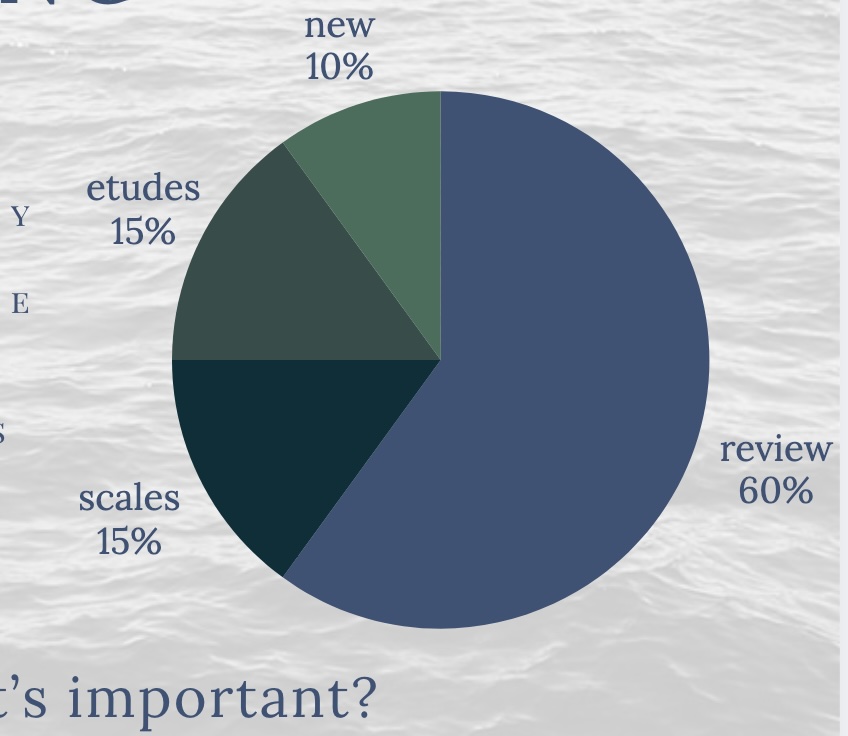
Review and Memorization
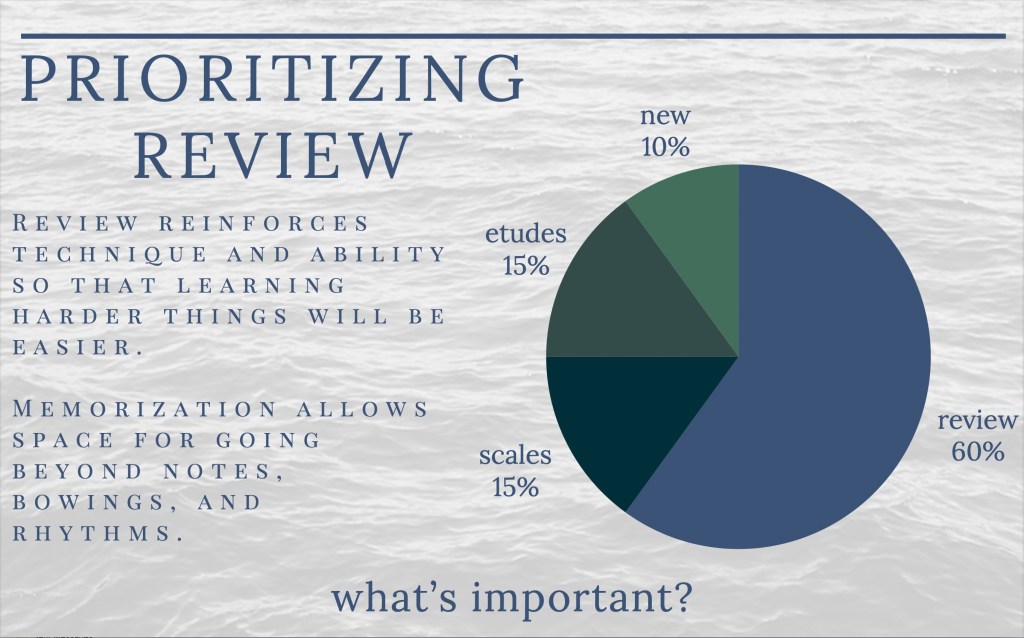
CLICK TO SEE FULL GRAPHIC WHAT DOES REVIEW DO FOR US?
- MAKES NEW MATERIAL EASIER
- many techniques we learn in early pieces will show up again later on
- review strengthens connections in material already learned
- being able to easily spiral back to an idea or technique previously learned will make new material easier and more natural
- REDUCES PERFORMANCE ANXIETY
- review helps with recall
- memorization and muscle memory not only help to refine musicality but also reduce performance anxiety
- PROVIDES SCAFFOLDING
- review aids in developing techniques and skills
- Being able to do something well, easily, and automatically is critical scaffolding for building and developing new technique
- SHIFTS FOCUS
- music is far more than just notes and rhythms
- review helps us give more attention to detail
- when we internalize the basics solidly, we can shift focus to points of expression
- detail-orientation carries over to all other aspects of life – it’s not just about music.
- MAKES NEW MATERIAL EASIER
-
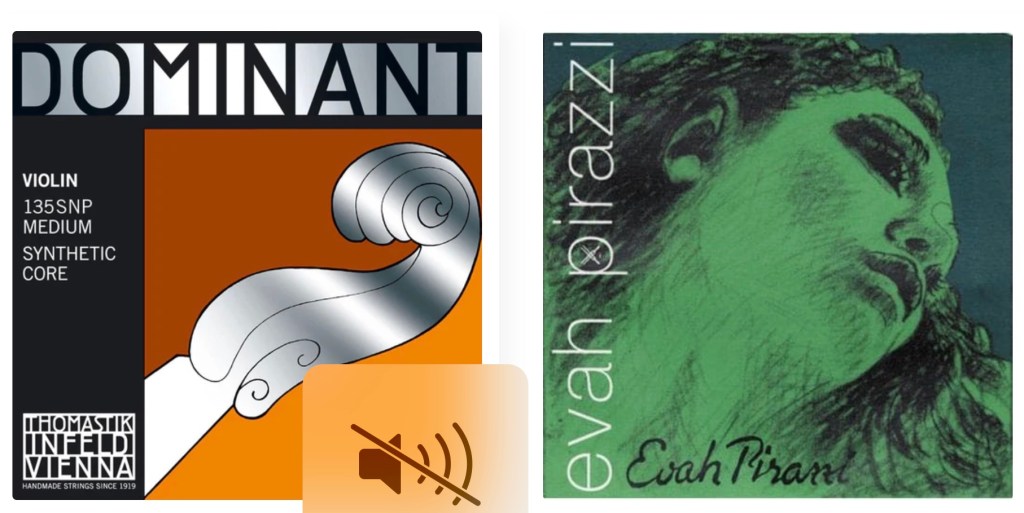
Time for a string check!
With the holiday recital coming up, this is the ideal moment to take a hard look at the condition of your strings. The quality and lifespan of violin strings have a measurable impact on sound. When strings get worn out, tone dulls, tuning becomes unstable, and even strong playing can sound muted.
If your strings are older than 9–12 months (or 6 months with heavy practice), it’s likely time to replace them.
Recommendations:
- Dominant or Evah Pirazzi: they cost more but they genuinely sound better and last longer than lower-tier options.
- Shar usually has the best prices: https://www.sharmusic.com/collections/violin-string-sets
Strong suggestion going forward:
- Keep one spare full set of strings in the case at all times. It prevents last-minute panic if a string breaks the week (or the day) of a performance.
- Don’t throw out the old ones; keep them as emergency backups.
-
Motivation
As we move deeper into the semester, I want to acknowledge a stage of the learning cycle that applies to all levels, beginners and “veterans” alike. The early excitement of the new school year has faded, and we’re entering the phase where lasting progress depends on consistency and follow-through. This is true whether a student is working on Twinkles or polishing a concerto.
A dip in motivation right now is not a problem; it simply means we’ve reached the point where craft begins. Repetition, stamina, attention, and detail become the real drivers of progress. Students who stay steady through this stretch make noticeable leaps by January, regardless of where they are in the repertoire.
Practice doesn’t need to be long or miserable. It needs to be structured and repeatable. Five focused minutes a day will always produce more growth than one heroic session the day before your lesson or rehearsal. If practice at home has become emotional, chaotic, or inconsistent, that’s not failure; it just means the routine needs a better system. I’m happy to help troubleshoot and share practice-game strategies and tools for anyone who needs new ideas.
Holiday performance opportunities are coming up, and the work done now determines whether students walk on stage confident or anxious. This is a chance to share music with loved ones and to experience the payoff of steady effort.
Thank you for supporting your student through this essential phase of the process. Your consistency at home matters more than talent, age, or “natural enthusiasm.” If you’d like help making practice smoother, more efficient, or more enjoyable while still productive, reach out anytime.
-
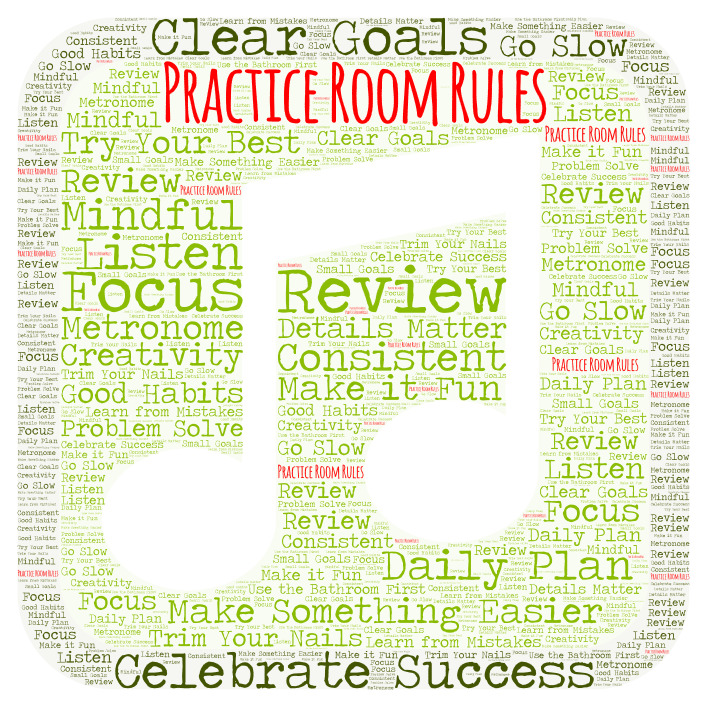
Practice Rules
Review: forms a foundation you can build on
Go Slow: the slower you practice, the faster you learn
Problem Solve: meet the challenge of figuring out how to fix something
Make Something Easier: sometimes practicing a passage in a way that’s harder makes it ultimately easier
Daily Plan: decide what you want to accomplish
Make it Fun: “gameify” your practice and keep score
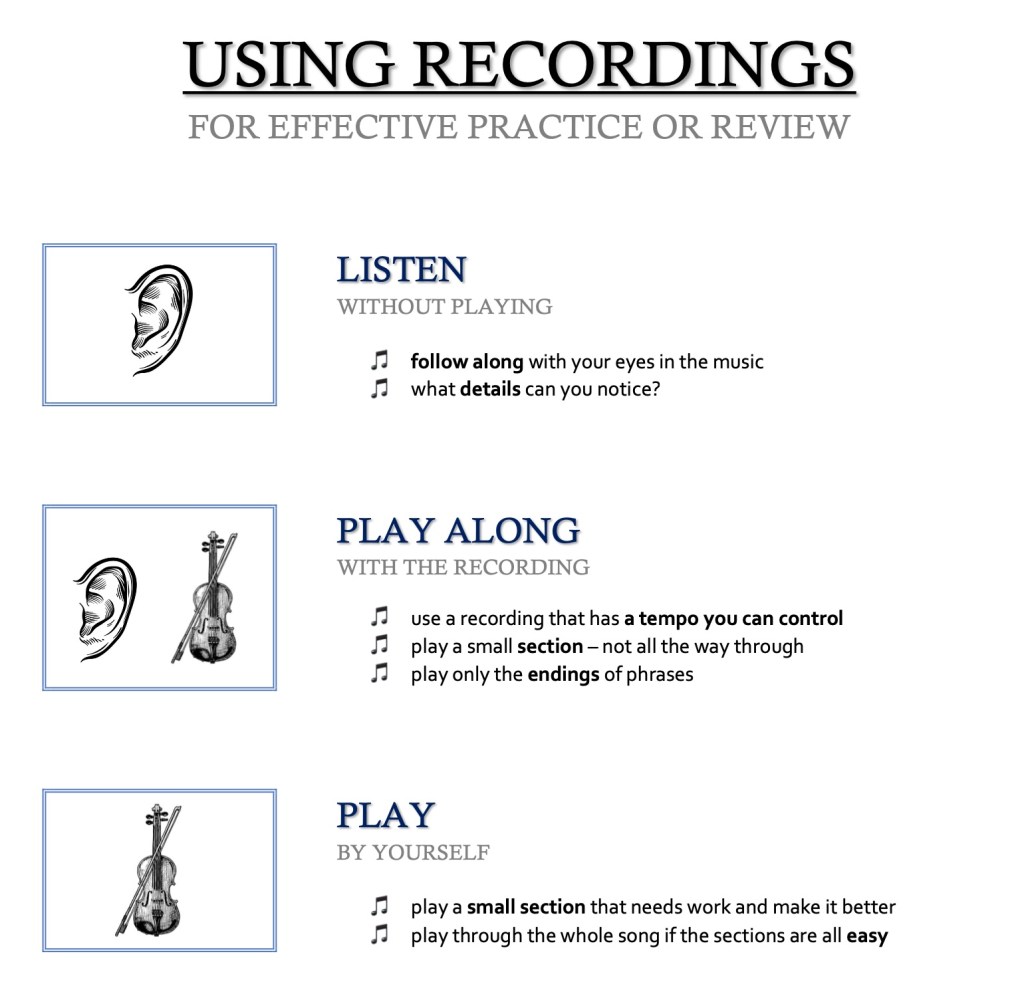
Listen: reference recordings are gold
Consistent: 10 minutes every day is better than 60 minutes all at once
Trim Your Nails: yeah. Do it. -
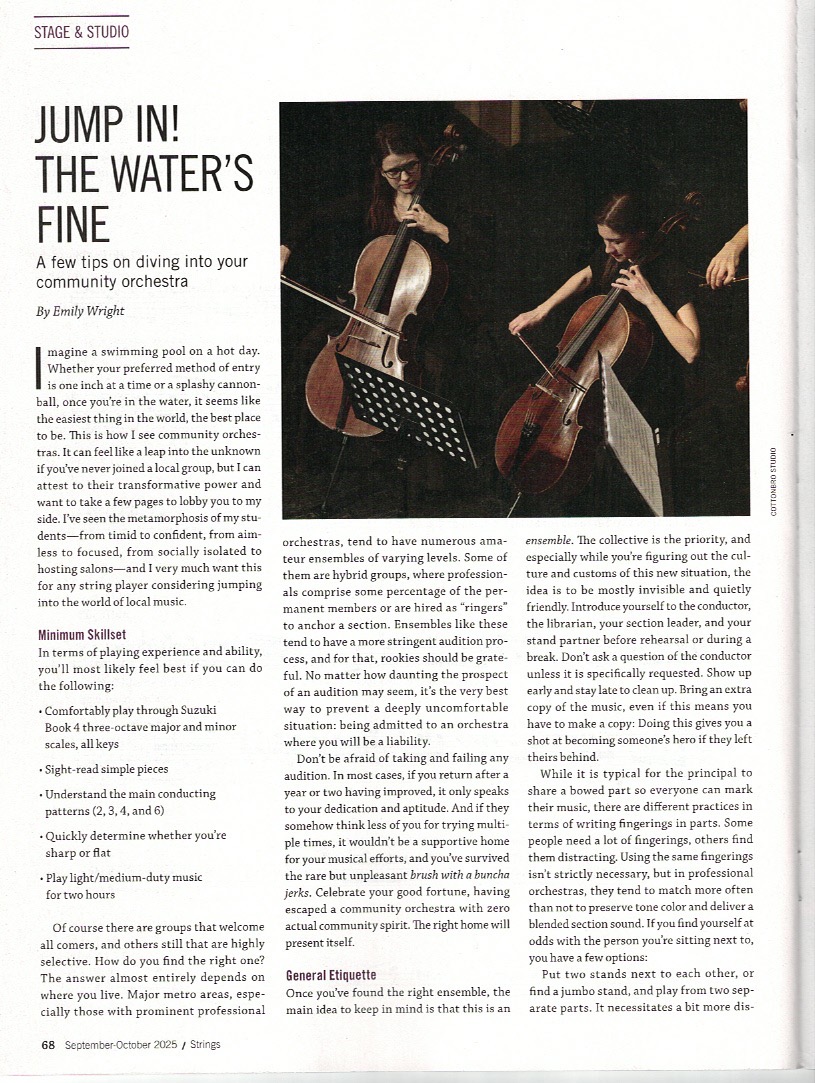
How to “orchestra”
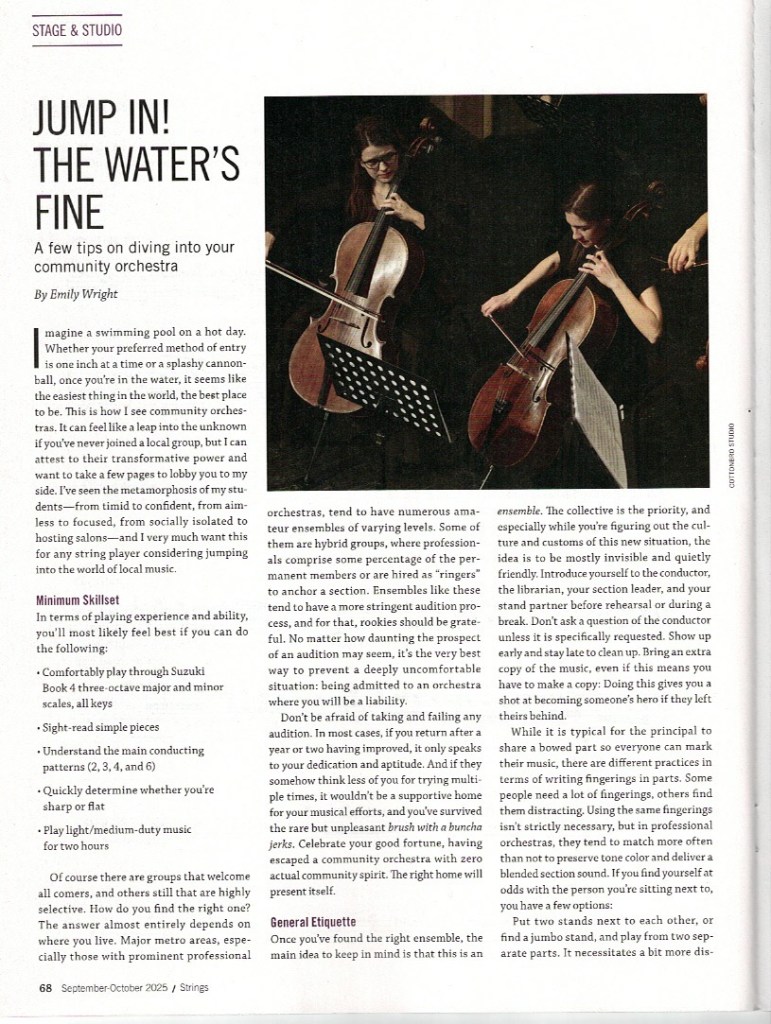
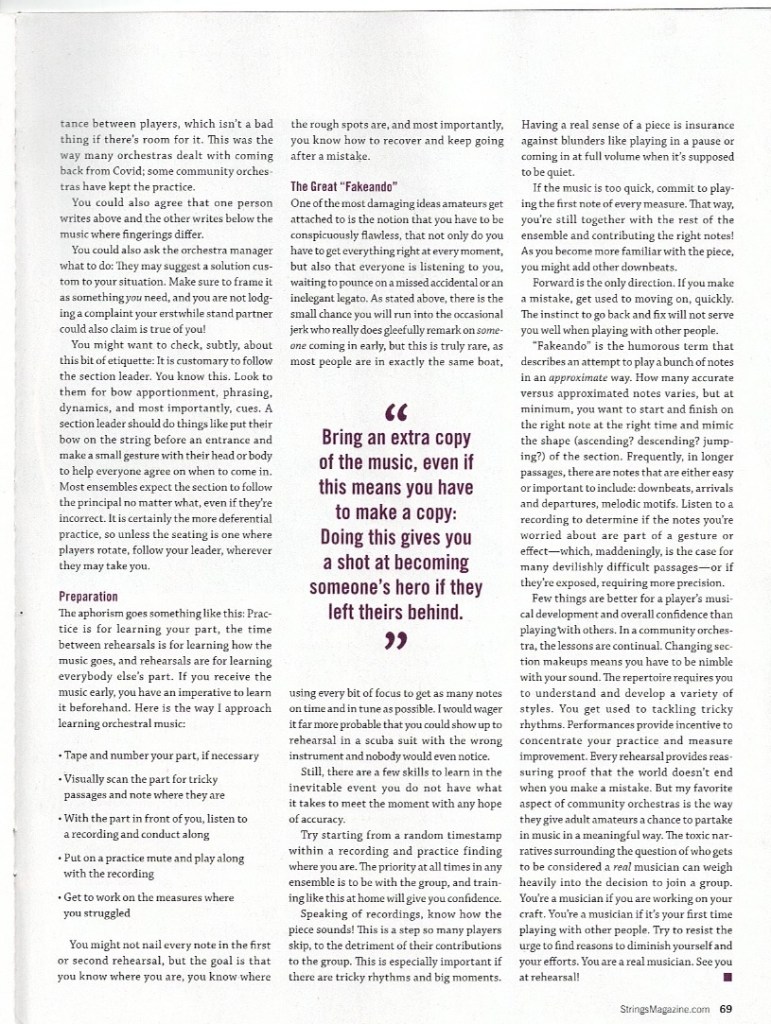
Great advice from this month’s Strings Magazine about how to prepare for playing in an orchestra, and basic expectations and etiquette. This is written about community orchestras but applies to youth orchestras too!